
SPODE 1770 - 1833
Spode is one of the greatest names of the Industrial Revolution. Josiah Spode the First was born on 23 March 1733 and saw his father buried in a pauper’s grave when he was just six years old. A young boy or girl in the Potteries had two choices in the 1720s, the coal pits or the local pottery. Spode chose pots and aged seven worked for a local pottery and when he was sixteen was apprenticed to Thomas Whieldon for five years after leaving in 1754 he went to Turner & Banks and was married in the same year. His first child, Josiah was born on 8 May 1755. He established his own company in 1776 in Church Street, (then known as High Street) Stoke, concentrating on the production of ceramic wares of the finest quality in a variety of bodies and sent his son to London to open a retail establishment at No. 29 Fore Street, Cripplegate, later acquiring an extensive warehouse and showrooms at No. 5 Portugal Street.
Josiah Spode the First is particularly recognised as having developed the technique for underglaze transfer printing on earthenware c.1784 and to have produced the first printed Willow patterns. He focused his attention on the manufacture of porcelain, a technically more difficult but much finer material than he had previously made, and in 1796 introduced a body called Stoke China which shortly afterwards, was renamed Bone China, due to the high proportion of calcined ox-bone in its formula. He died suddenly in 1797 and it fell to his son Josiah Spode the Second to continue and perfect his father’s developments, and progressed the business for the next thirty years. The Spode company grew to be the largest pottery in Stoke and the leading manufacturer of fine ceramics of every kind. Spode the Second was appointed ‘Potter to the Prince of Wales’ when the Prince Regent visited the factory in 1806.
Spode’s china bodies, first bone china and, from 1822, felspar porcelain, outclassed all other contemporary English porcelains not just in terms of beauty but also for reliability of the product. Spode’s felspar porcelain is recognised as the forerunner of all modern English bone china.
As the technique for transfer printing on earthenware was perfected, Spode’s blue and white transfer printed wares were generally considered to be among the finest ever made. The most famous pattern of which, Italian, was introduced in 1816.
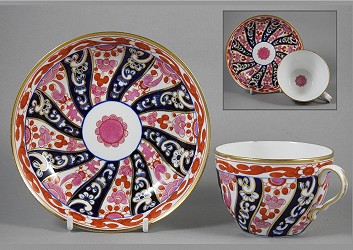
Spode teacup and saucer decorated with pattern no. 2616, c.1818
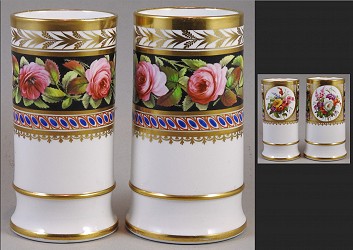
Two Spode matchpots decorated with pattern no. 1626, c.1810
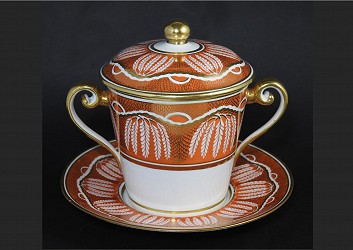
Chocolate Cup, cover and stand pattern number 1084, c.1808

Spode made matchings for other factories
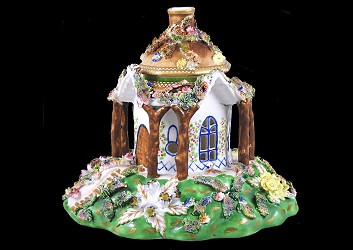
Spode felspar porcelain pastille burner, c.1820
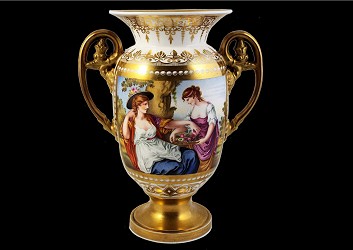
New Shape French Jar "The Liberal Pair" c.1820
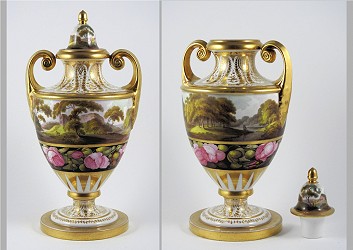
Bone china covered vase hand painted with a continuous landscape. Height 25cm, c.1805 - 10.
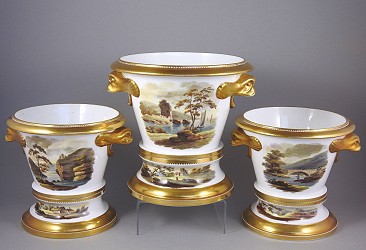
Bone china garniture of New Shape garden pots and stands with gilded dolphin head handles, pattern number 1926. Heights 13.5cm and 16cm, c.1812 - 15.
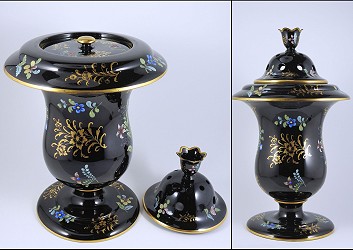
Glazed Basalt vase shape pot pourri in three parts, pattern number 3420. Height 29cm, c. 1822.
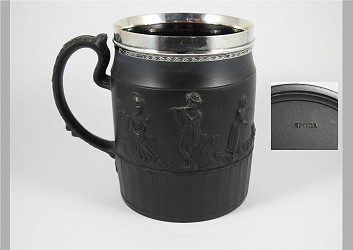
Black basalt tankard with applied sprig mouldings. Height 12cm, c.1790 - 1800.

Earthenware tureen, cover and stand transfer printed with scenes from the Indian Sporting series.
Length 43cm, c. 1820
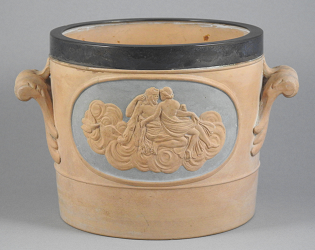
Terracotta wine coaster moulded with panels of wine lovers on a blue grey painted ground.
Height 12.5cm, c.1805 - 1810.
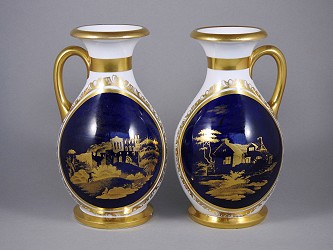
Pair of bone china long neck bottles bat printed in gold on cobalt blue panels, pattern number 1697.
Height 16cm, c. 1811.
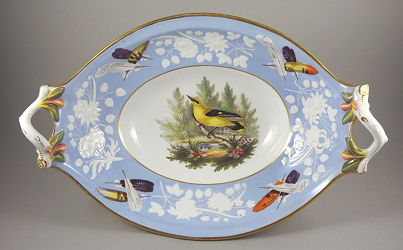
Bone china comport with hand painted Golden Oriole to centre and feathers around rim, pattern number 1979. Length 37cm, c. 1814.

Bone china tray with loop handle, pattern number 1793.
Length 19cm width 16.5cm, c.1812
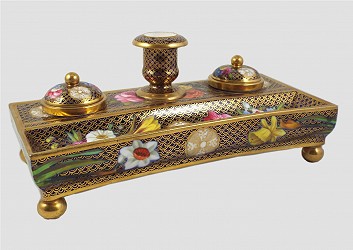
Spode desk stand decorated with iconic pattern number 1166
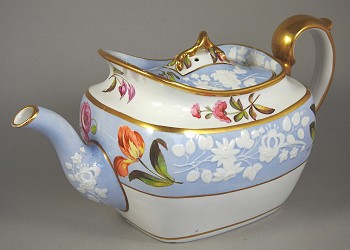
Spode flower embossed teapot decorated with pattern number 2004
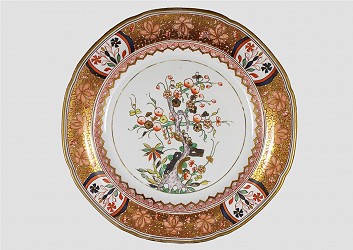
Spode New Stone plate decorated with pattern number 2038
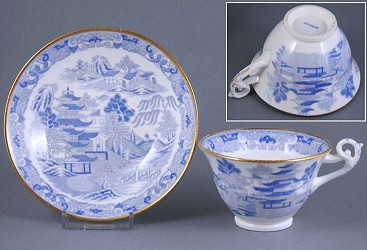
Transfer printed in Blue underglaze, uncommon Bell shape teacup and saucer
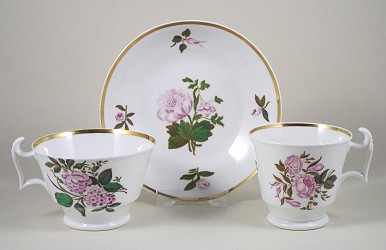
Bone china trio bat printed with flowers, coloured over, pattern number 2947, c. 1820
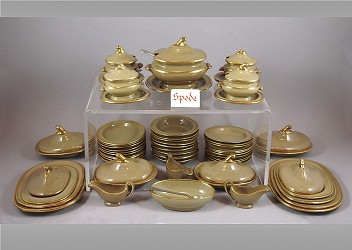
Miniature dinner service in Drabware, c.1810.
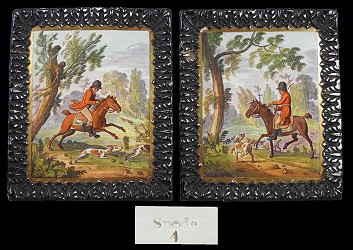
Small Spode earthenware pictures plaques, c.1815

Spode artists paint palettes, c.1820
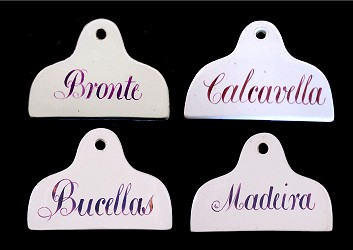
Spode Wine Cellar Bina labels, c.1805

A sauce tureen with fixed and cover of navette shape,pattern number 1640, c. 1811.
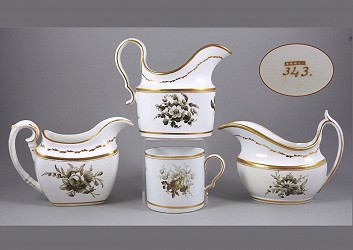
3 shapes of bone china creamers plus can, pattern number 343, c. 1803
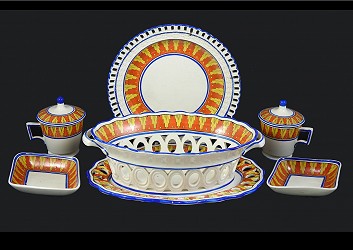
Bolding decorated creamware decorated with pattern number 1456, c.1810

3 beaded vases with hand painted birds, pattern number 1805, c. 1812

Box shape teapot in caneware with blue enamel decoration c. 1805-10
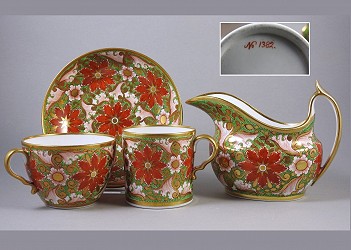
Bone china teawares in pattern 1382, c.1810

A selection of different shape creamers all in pattern 2721, c. 1820

Uncommon shape coffee pots: Black basalt and bone china
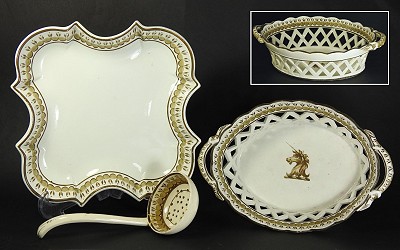
Early creamwares in pattern number 136, c.1790
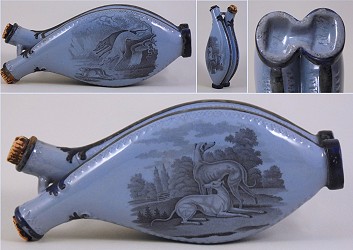
Spode Gemel flask in blue body with animal bat prints, c.1805
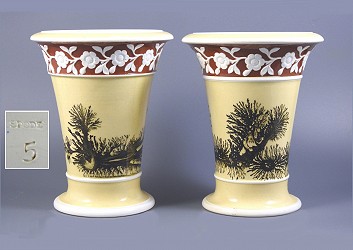
Pair of Spode earthenware Beaker Matchpots with dendritic decoration and daisy moulding, c.1810