
MOULDED DECORATION
BORDER EMBOSSMENT
Embossed decoration consists of motifs built into the mould used to make the whole piece. Spode produced several embossments which were used extensively on dessert and tea wares and to a lesser extent on dinner ware. The earlier popular embossments included the following: Flower, Dolphin, Wicker Weave, Swag, Dresden, Spear Leaf, Butterfly and Wreath. Later came: Honeycomb, Acanthus and others.
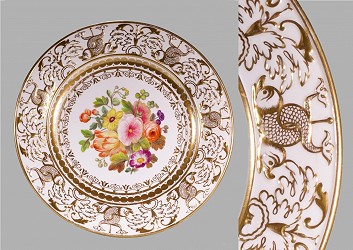
Dolphin embossed, c.1812
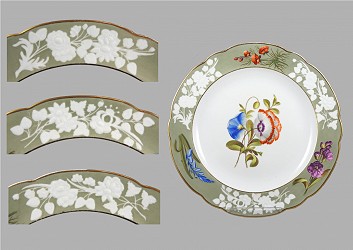
Flower embossed, c.1813
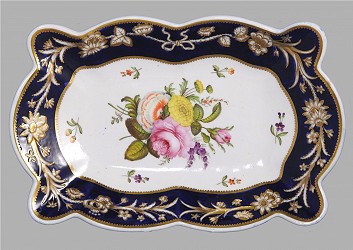
Spear Leaf embossed, c.1820

Swag embossed, c.1813
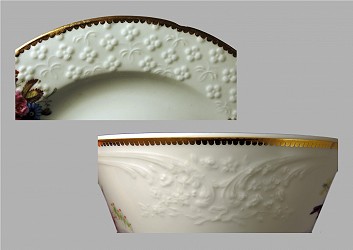
Dresden embossed, c.1816 and Wreath embossed, c. 1820
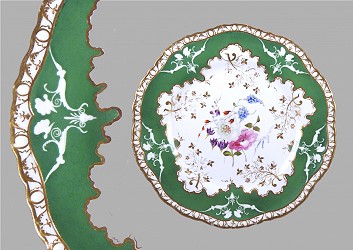
Butterfly embossed, c.1824
SPRIGGING
Applied sprigging was used for high relief decoration found on Jasper, Basalt, Red ware, Stoneware and Bone China. The subjects used for sprigged decoration were mainly of classical characters, hunting and Indian Sporting scenes and border designs. The clay body for the sprig was pushed into a mould, the back scraped flat and then released onto a damp cloth. This sprig is then wetted lightly with a brush and using another cloth pressed lightly onto the surface of the pot and then fired.
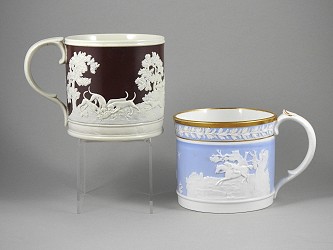
Spode stoneware jug dipped in brown with sprigged fox hunting ornaments. Spode bone china mug with sprigged stag hunting ornaments, c.1815

Spode bone china jug with sprigged ‘Indian Sporting’ ornaments and bone china Scent Jar with sprigged Bacchanalian ornaments, c.1815
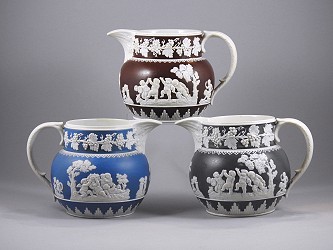
Three Spode stoneware jugs, jasper dipped in three different colours with sprigged Bacchanalian ornaments, c.1815
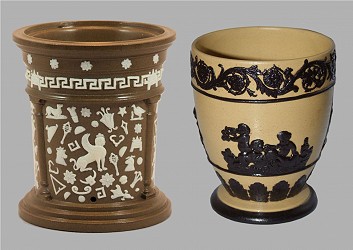
Brown stoneware pyrophorous pot with sprigged ‘Egyptian’ ornaments and Caneware bow pot with black sprigged ornaments, c.1815

Spode feldspathic porcelain jugs with sprigged ornaments in grey, c.1815

Copeland cane coloured jug , green ground with sprigged ornaments, fully glazed. Copeland caneware caddy with sprigged ornaments, c.1880.