
JEWELLING & BEADING
JEWELLING
Jewelling and pearling were undertaken by gilders and the process involved a tiny amount of ceramic enamel being placed onto the design, which had been outlined in gold, using a pencil (paint brush with long narrow hairs). Most ‘jewels’ are of opaque and thick enamel and imitate precious stones such as rubies, emeralds, amethysts and turquoise. Pearling is the same process but using white enamel.
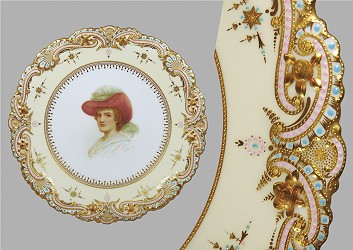
Copeland plate painted by Samuel Alcock with turquoise and pink jewelling c. 1883
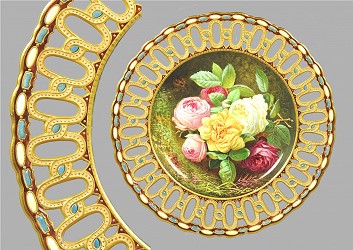
Copeland plate painted by Charles Hurten with circular and lozenge shape turquoise jewels and white pearls., c. 1885
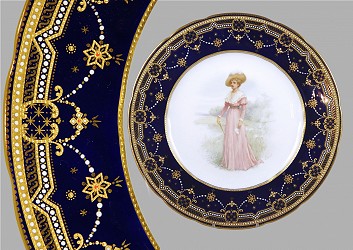
Copeland plate painted by Samuel Alcock with copious pearling, c. 1885
BEADING
Beading is a line of small modelled pearl shaped clay balls usually reserved in white set against a solid gilt ground, first introduced c.1810.
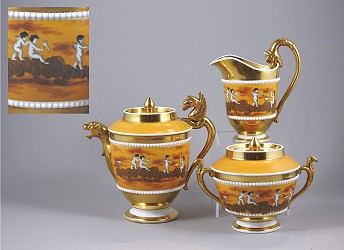
Spode tea wares bat printed and overpainted in colour, with two rows of beading, c.1817

Various Spode examples of beading, c.1820

Spode turned down Violet pot with gilded beading , c. 1820