
HAND PAINTING
Between 1800 and 1822, all overglazed decoration at Spode was subcontracted to Henry Daniel, who ran his own workshop on the site, creating some of the most exquisite enamelling ever produced. Little is known about the early painters at Spode. It was only from the 1860s that individual painters became known, when the very best were permitted to sign their work.
There was a strict hierarchy within the painting and gilding workshops. Premier artists and gilders such as Hurten or Deaville were given a degree of freedom in their designs. Other painters, however, under the supervision of the Art Director, would be given express instructions as to subject matter and would specialise in one style. The surviving patterns often bear the instruction ‘painted by lads’ or ‘by women’. ‘Lads’ were apprentice painters, permitted to paint simple forms. ‘Women’ were sometimes trained to complete a repeated design but more commonly only filled in printed outlines.
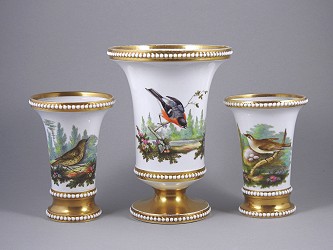
Three Spode beaded vases painted with named birds, c.1813
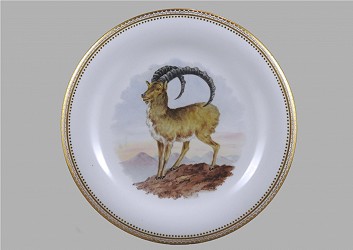
Copeland plate painted with an Ibex, c.1870

Copeland plate painted by Arthur Perry, c.1893

Spode plate with named view of Dover, c. 1825
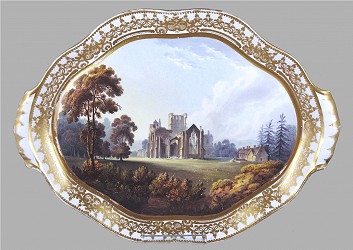
Spode tray with named view of Melrose Abbey, c. 1825
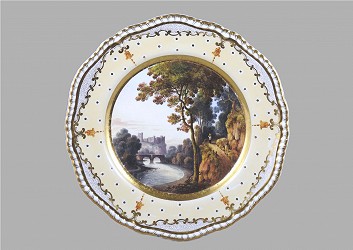
Spode plate with painted landscape, c.1830

Spode tureen stands painted with Curtis Botanical flowers, c.1815
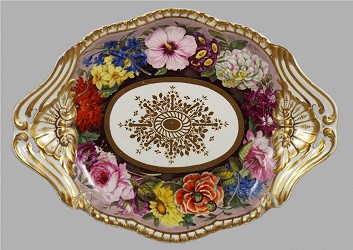
Spode dessert dish with richly painted flowers, c. 1824

Spode dessert dish painted with fruit and flowers, c. 1828
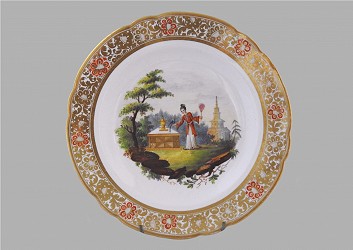
Spode plate painted with Chinese figure in landscape c.1805-10
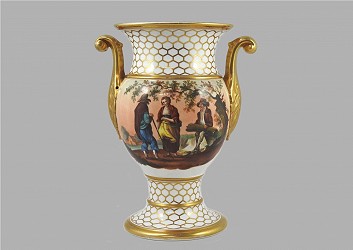
Spode New shape Jar with figure painting, c. 1815
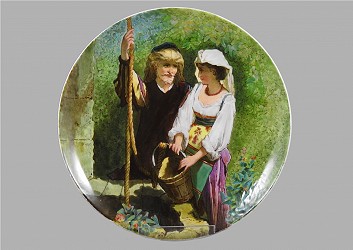
Copeland plate with figure painting, c. 1865